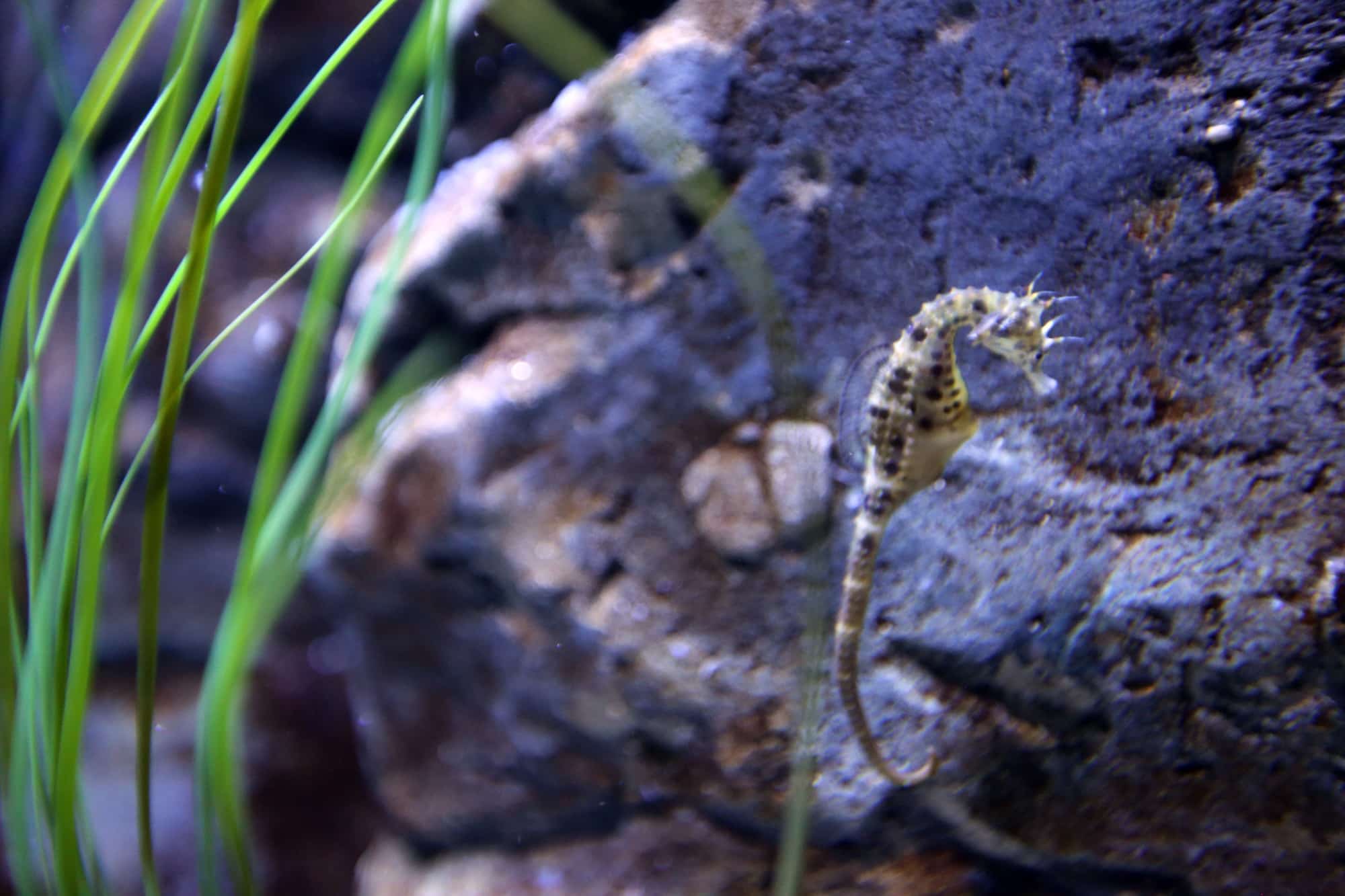
Short Snouted Seahorses (Hippocampus hippocampus) are delicate creatures and not very strong swimmers – they have a single fin running along their back to help them stay upright so they can usually be seen clinging onto seagrass and each other for support. They are masters of camouflage among the grasses and sandy bottoms and this helps them hide from predators. Seahorses have eyes that can move independently to one another, like a chameleon, and this helps them to spot any danger.
Did you know…
This is one of the two seahorse species that can be found native to the UK? The other species is the Long Snouted Seahorse, or Spiny Seahorse.
Conservation
The Short Snouted Seahorse is classified as Near Threatened on the IUCN Red List and are protected by the Wildlife and Countryside Act 1981. They are threatened by environmental pollution and damage to their seagrass habitat.